Green Hysland Technical Assistance Programme concludes, helping four European islands explore tailored hydrogen pathways
The Green Hysland Technical Assistance Programme has reached its conclusion after providing four European island territories with tailored technical support to explore how green hydrogen could contribute to their energy transition.
The programme offered free technical assistance from the Aragon Hydrogen Foundation (FHa) and specialist energy consultancy Enercy to La Réunion (France), Santa Maria in the Azores (Portugal), Ibiza (Spain) and the West Estonian Island archipelago (Estonia). The aim was to help each territory assess how a Hydrogen Valley – an integrated local ecosystem connecting hydrogen production, storage, distribution and multiple types of hydrogen end-use – could be adapted to its own energy system and local priorities.
How the Technical Assistance Programme worked
The four territories were selected following an open call for applications launched through the Hydrogen Territories Platform (HTP), an initiative set up to support the development and replication of hydrogen ecosystems across Europe.

The Green Hysland Technical Assistance Programme combined technical mentoring with a pre-feasibility assessment for each participating territory. Through one joint introductory session and several bilateral workshops, experts from FHa and Enercy worked with the beneficiaries to understand each island’s energy system, renewable energy resources, existing infrastructure and priority sectors for decarbonisation.
The teams then used their technical hydrogen sector expertise, supported by the HTP Tool, a simulation platform developed by FHa, to explore potential hydrogen value chains, from renewable electricity generation and hydrogen production through to storage, distribution and end use. Taking into account local priorities, the technical work was adapted to the specific circumstances of each territory.
The result is four tailored pre-feasibility assessments providing a starting point for local stakeholders to consider potential Hydrogen Valley projects and decide whether to progress towards more detailed feasibility work.
From a common approach to four different pathways
The four cases illustrate why hydrogen development on islands cannot follow a one-size-fits-all approach.
For Santa Maria in the Azores, the focus was on the potential of hydrogen to make better use of renewable electricity that might otherwise be curtailed because of the island’s isolated electricity system and grid constraints. The study explored how hydrogen could store this surplus energy and later be converted back into electricity, providing an additional flexibility option for the local energy system.
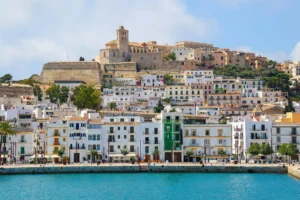
In Ibiza, where renewable electricity production remains limited and there is currently no hydrogen demand, the programme focused on a different question: where could hydrogen actually create value? Working with the Cluster for the Energy Transition of the Balearic Islands, participants explored the potential of hydrogen for decarbonising public transport, including different options for producing the renewable electricity needed for hydrogen production.
Juan Tur Torres, co-founder of Solsulet, a photovoltaic solar energy company operating across the Balearic Islands and a member of the Cluster, highlighted the importance of starting from a concrete need: “Ibiza consumes no hydrogen today and has no heavy industry, so the honest question was never how much we could produce, but who would actually buy it. The programme forced us to start from demand rather than from ambition, and that is the most useful thing it gave us.”
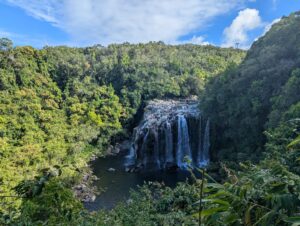
On La Réunion, the Technical Assistance Programme focused on the potential of hydrogen for stationary and heavy mobility, in the context of an island seeking greater energy self-sufficiency and a reduction in its dependence on imported energy resources. “Hydrogen represents a solution for the future of isolated islands and territories: a clean and sustainable solution, with economic interest considering insular challenges of energy self-sufficiency, battery waste management and local jobs.” — Matthieu Hoarau, CEO of Energies Réunion
Meanwhile, the West Estonian Island archipelago explored several potential hydrogen value chains, including direct hydrogen and hydrogen-derived fuels for ferry and maritime applications, as well as possible residential applications. The assessment provides the Estonian Islands Energy Agency with a basis for considering how the islands could move from a general hydrogen opportunity towards more concrete pilot development and potentially even large-scale export.
What the programme showed
While the four studies differ considerably, they point to several conditions that are important when considering the development of hydrogen ecosystems on islands.
The availability of renewable energy is one of them, whether through existing renewable-energy surpluses or new renewable generation. Identifying a clear end-use and potential offtaker is equally important, helping ensure that hydrogen production is connected to a concrete local need.
The studies also highlight the value of locating production, storage and end-use as close together as possible where feasible, reducing logistical complexity. Finally, the scale of investment required means that cooperation between public authorities, project developers, energy stakeholders and potential investors will be essential for moving from pre-feasibility towards implementation.
The Green Hysland Technical Assistance Programme therefore did not provide a single blueprint for island hydrogen development. Instead, it has given each participating territory a more detailed understanding of what a Hydrogen Valley could look like in its own context, the conditions that would need to be met, and guidance for the questions to address in a potential next phase of project development.
For the participating islands, this represents a starting point for deciding whether to progress towards more advanced feasibility work and, ultimately, concrete hydrogen projects.
The experience of the four territories reinforces a central principle behind the “Green Hysland” project: hydrogen ecosystems need to be designed around the specific energy resources, infrastructure, needs and opportunities of each territory.
As the “Green Hysland” project moves towards its conclusion, the Technical Assistance Programme provides another example of how the Hydrogen Valley approach can be shared beyond a single demonstration site, helping islands across Europe explore their own pathways towards more resilient, renewable and locally adapted energy systems.

 SUBSCRIBE